Okanagan Weather & Climate
Four Seasons In The Southern Interior British Columbia
Here in the southern interior British Columbia, Okanagan weather is influenced by the Canadian Coastal and Cascade mountain ranges.
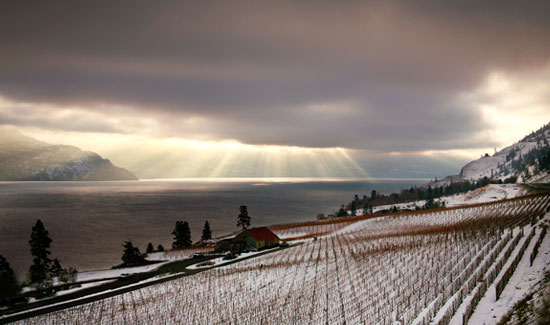 Winter In The Okanagan - A Breathtaking View Of Okanagan Lake Is From Greata Ranch Near Peachland British Columbia
The photo above is courtesy of Janelle Webster
The mountains protect the southern interior BC from the cold arctic winter weather that comes from the Pacific Ocean. This makes the climate and Okanagan weather ideally mild in the winter, and offers us lots of summer sunshine. But it also brings us the rain. And though winter weather is generally mild if you're planning to visit the Okanagan during that season be prepared for general cloud cover and a mix of snow and rainy days.
Geographical Influences That Affect Okanagan Weather
The Southern Interior region of BC lies within the Great Basin Desert region, between Oliver BC and the Canada-United States border, and is considered part of the Great Basin Desert Region, which runs south to the Baja Peninsula in Mexico. In this region the climate is most unique; you'll find semi-arid desert conditions - very hot, dry summers, which contribute to the Okanagan desert ecosystems, and mild winter weather.
In total, about a third of summer temperatures in the South Okanagan Valley are considered tropical, that is, temperatures that are greater than 30 °C or 85 °F.
The Central Okanagan lies in the Beaverdell Range and North Okanagan region lies in the higher Monashee Mountain ranges, and experiences a more continental climate.
And the Shuswap region lies in dense forest near the Monashee Mountains, Cariboo Mountains and the Interior Plateau, and enjoys more distinct seasons. Winter is colder, and this region receives a lot more snow than it's neighboring southern regions.
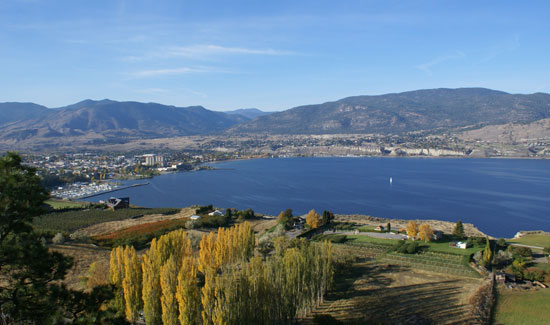
Okanagan weather can be considered fairly predictable and consistent most of the time. On occasion we do experience, what we consider weather extremes to be...
- An occasional heavy downpour.
- The odd windstorm - powerful enough to uproot trees.
- Our version of a blizzard - which really is heavy snow that doesn't actually melt as it hits the ground. It's not common, but the snow then stays around for days or maybe a few weeks.
Sometimes in the winter it's warmer at the ski hills than it is on the valley floor, which you'll hear being referred to by locals as a 'pineapple express'. Winter 'cold snaps' in January don't tend keep us indoors.
Summer thunder storms don't stay around too long, and are generally followed by bright sunshine and brilliant greenery. On the other hand, a big risk the Okanagan, and all of BC faces due to the summer's hot dry climate is forest fires, which begin usually around June lasting through the fall.
To give you an idea, these Okanagan weather averages are based on the Central Okanagan Region:
- Average high temperature (summer): 28 C/84 F
- Average low temperature (winter): -8 C/16 F
- Average Hours of Sunshine: over 2000 per year
- Average Rainfall: Approximately 300 mm/11in yearly
- Average Snowfall: 139.8cm/55in in the valleys (varies by city) and up to 644cm/253" in the mountains
So, What Can You Expect Weather Wise During Each Season In The Okanagan?
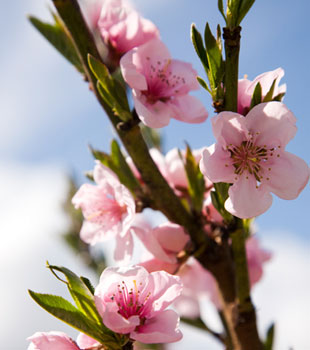 Spring Blossoms
Springtime (March, April, May) in the Okanagan Valley is fresh and beautiful, with the first cherry blossoms waking up the lower landscapes with color. - (ok, it's also known as allergy season!).
The temperature is generally quite warm during the day, 10 - almost 20 degrees Celsius, and mornings can be around the freezing mark, or sometimes just below. The nicest thing is that the clouds that tend to blanket the valley in winter start to disappear, and we begin to enjoy bright days of sunshine.
You may want a light raincoat handy for daytime weather changes...We have spent a day at one of our favorite best beaches in April! The weather changed from sunshine, to rain, to hail and then snow all in one day!! But we had our wiener roast and campfire anyway! It's pretty common to go spring skiing in the morning, and a bike ride in shorts in the afternoon! A warm jacket is a sure bet for being out during the evenings. For younger kids, you'll likely want them to have a hat and gloves.
Summer - Obviously we don't need to tell you what to bring if you're visiting the Okanagan during the hot summer. Okanagan British Columbia weather in the summer is just plain beautiful! Just don't forget your bathing suit :)
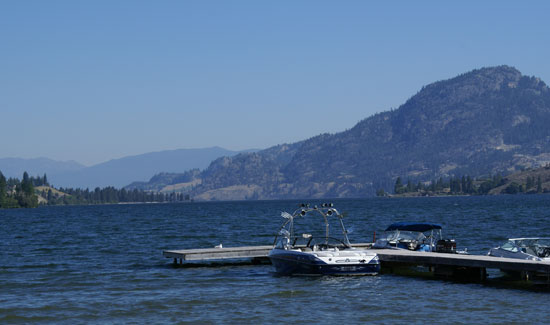
Where the average high summer daytime temperature in the North Okanagan, Shuswap is about 25°C (77°F), daytime temperatures in Osoyoos, the hottest Okanagan weather, often are above 35°C (100°F), humidity is quite low and the nights are generally fairly pleasant.
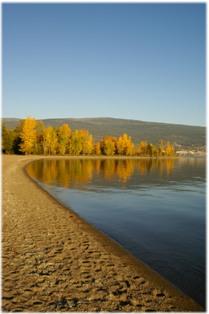 Sun-Oka Beach In The Fall
Autumn is a beautiful time to be here. The transition into fall season is less distinct in the South Okanagan because it's situated in the Great Basin desert region, but the Central and North Okanagan British Columbia weather provides a much more colorful autumn season that starts in early to mid September; more typical of a continental climate.
A mild colorful autumn season that extends at times into late October and November, when a morning chill is the best time for fresh apple picking.
Like typical weather in Canada, Okanagan weather is still warm enough for fall camping and fishing, and of course golfing. Evenings are cooler, crisper and as the sun begins to set earlier, the lakes are cooler - really too cool to swim unless you're really brave!
During the month of September, temperatures are still quite warm in the day, mid 20's°C, when early fall apple and pears are ready. If you're out and about, it's a good idea to have layers handy, as the weather can change quite quickly from a nice warm sunny afternoon, to cold, cloudy and rain. October really cools off, and it's time to start packing up the camping gear and switch it our for the skis and snowboards to get ready for ski season.
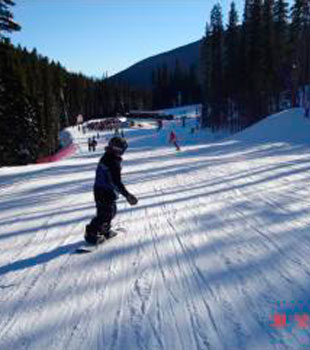 Winter Skiing At Apex Mountain
When does winter start?
Well, that depends on what part of the Okanagan you're in. Again, the South Okanagan sees winter a bit later that it's northern neighbor. Snow lovers, of course, determine the start of winter by the start of the snow season.
Okanagan weather brings freezing or near freezing temperatures and snow that lasts from mid November to early March, so if you're visiting during that time, bring your winter coats, hats and gloves, and winter boots - all the typical winter weather wear. Although, sometimes, a light winter vest is all that one may need for an afternoon walk.
Temperatures usually range between just below freezing to just above. When it's raining at the Valley floor, we know it's snowing up at the ski resorts! Smaller lakes at higher elevations freeze over and are popular for ice fishing! Up at the ski hills, the weather is perfect! Rarely in the minus 20's°C (-4°F), there's no better place to be to escape the cloud cover down below! Here is the current Interior BC weather forecast for today and the next two weeks.
Love the Okanagan? Hey, then, share the love!



Looking for something Okanagan related?
You can search here for custom Google results (ads also appear) and for pages on our site.
Okanagan Vacation Guide Home |
Top Okanagan Resorts |
Romantic Getaways |
Stay In Kelowna
Contact Us |
About Us |
Privacy Policy |
Sitemap |
Facebook |
Top of Page
Copyright© 2008-2020 OkanaganVacationGuide.com